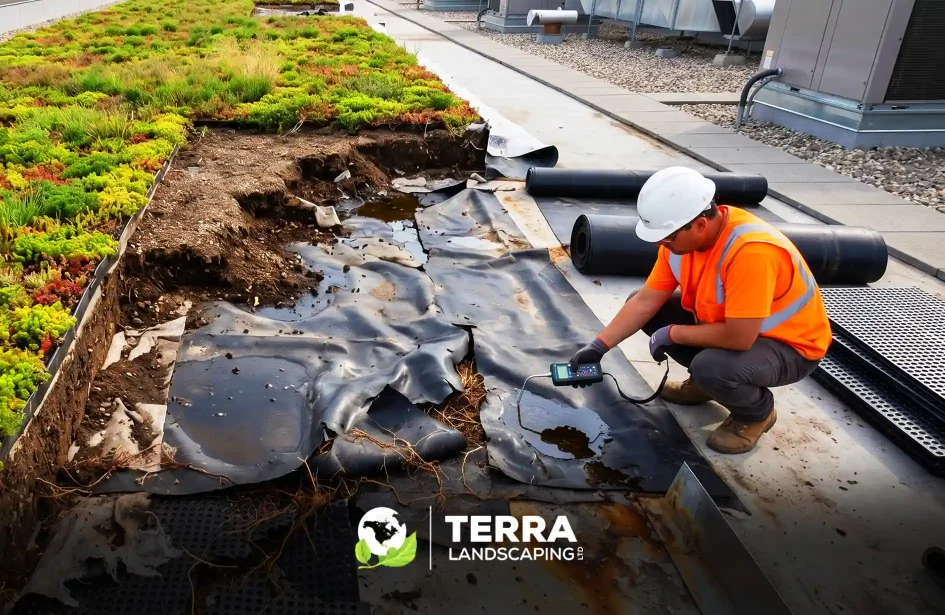
A green roof is a beautiful thing, right up until water ends up somewhere it shouldn’t. And when one leaks, it’s never a quick patch. The leak hides under tonnes of soil and plants, travels sideways before it ever shows up inside, and by the time you spot the stain on your ceiling, you’re often looking at tearing the whole roof apart just to find the source.
That’s what makes green roof waterproofing the single most important part of the build. Get it right, and the roof outlives the building. Get it wrong, and you pay for it twice.
In Edmonton, our freeze-thaw winters raise the stakes even higher. Here are the seven mistakes that quietly destroy green roof waterproofing & drainage systems, and how to dodge every one. Planning a build? Terra’s green roofing services in Edmonton handle this start to finish.
1. Choosing the Wrong Waterproofing Membrane
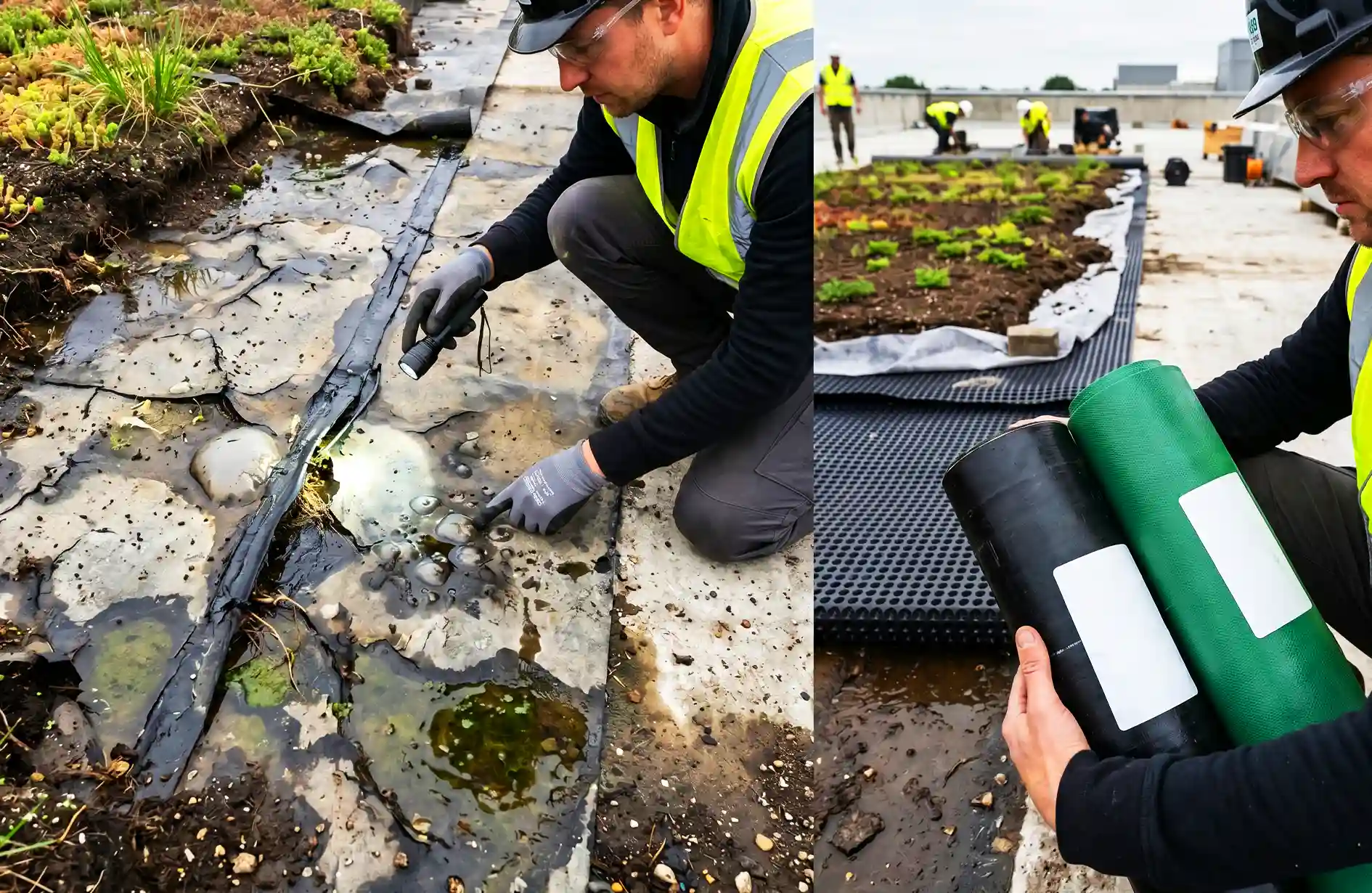 The membrane is the layer that actually keeps water out. Everything else sits on top of it, so if you pick wrong here, nothing above it can save you.
The classic mistake is using a standard roofing membrane that isn’t root-resistant. Plant roots are relentless. They find the smallest weakness and push straight through, and once they breach the green roof waterproofing membrane, water follows.
– Choose a proven root-resistant membrane, usually TPO, EPDM, or PVC
– Make sure it’s bonded properly to a clean, dry deck
– Don’t let price alone decide; the cheap membrane is the expensive one later
The waterproofing membrane green roof Edmonton projects rely on has to handle cold, movement, and decades under load. This is not where you cut corners. Whether you call it a green roof or a garden roof, garden roof waterproofing Edmonton buildings need starts with the right membrane.
2. Skipping the Root Barrier
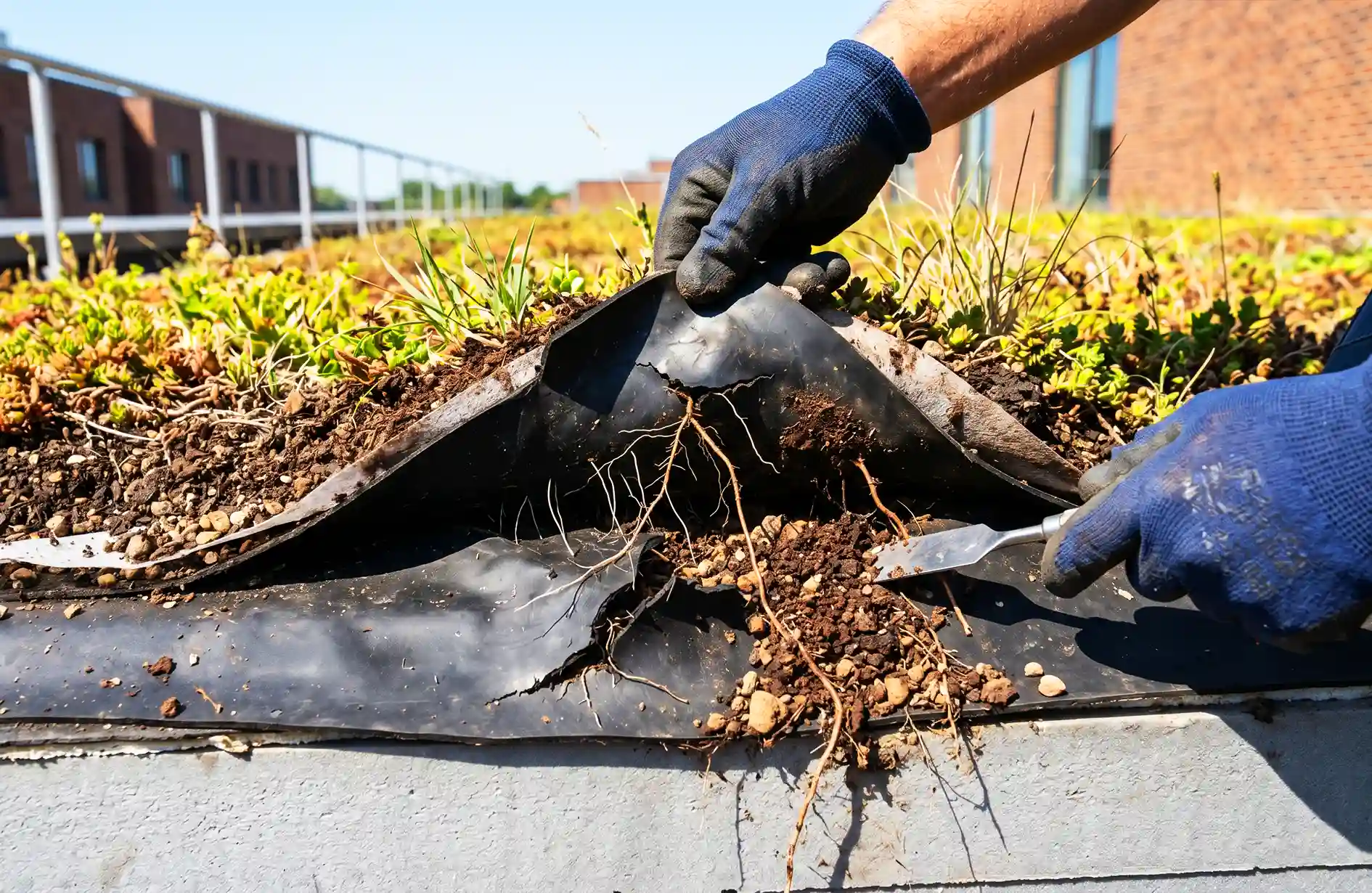 If your membrane isn’t fully root-proof on its own, it needs a dedicated root barrier above it. This is the layer that takes the punishment so the waterproofing doesn’t have to.
Skip it to save a little money, and roots eventually win. Once they reach the membrane, you’re not looking at a repair; you’re looking at a rebuild. A proper root barrier is cheap insurance against the most expensive failure on this list.
3. A Weak or Missing Drainage Layer
This is where the “drainage systems” half of the job lives, and it’s badly underrated. The drainage layer green roof systems depend on does two jobs at once: it carries excess water away, and it protects the membrane from sitting in standing water.
Skip it, or under-spec it, and water pools in the soil. That dead weight stresses the structure, drowns the plants, and pushes constant pressure against the waterproofing below.
Good design balances drainage with a retention layer that holds just enough water for the plants between rains. Strike that balance, and you also gain real stormwater retention, easing the load on city drains during heavy Edmonton storms. A poorly planned garden roof drainage system Edmonton buildings end up with is one of the most common reasons these roofs fail early. And once that water leaves the roof, it still has to go somewhere, which is where a proper Yard Drainage Solution at ground level takes over.
4. Letting Water Pond (Bad Slope)
Flat doesn’t mean level. Even a green roof needs a slight, deliberate slope so water moves toward the drains instead of sitting in puddles.
Ponding water is slow poison for a membrane. It works into the seams, freezes, expands, and chips away at long-term waterproofing performance season after season. Designing in proper fall from day one prevents it entirely.
5. Sloppy Detailing at Edges, Drains & Penetrations
Most leaks don’t start in the middle of the roof. They start at the edges, around drains and vent pipes, and where the roof meets a wall.
These spots get rushed during the waterproofing installation process, and they’re exactly where water finds a way in.
– Keep planting back from drains and walls with a clean, non-vegetated border of round river stones or pavers
– Never let pavers sit directly on the membrane, since foot traffic wears it through
– Detail every penetration like it’s the one that’s going to leak
6. No Leak Testing Before the Soil Goes Down
Here’s the one that haunts people. Once soil and plants go on top, the membrane disappears from view. If there’s a flaw, you won’t know until water shows up inside, and by then the leak could be metres away from the actual breach.
– The fix is simple and non-negotiable: test before you bury it.
– Flood test or run electronic leak detection while the membrane is still exposed
-Fix anything you find before a single layer goes on top
This one step is the backbone of the green roof leak prevention Edmonton owners actually count on.
7. Ignoring Freeze-Thaw & Skipping Maintenance
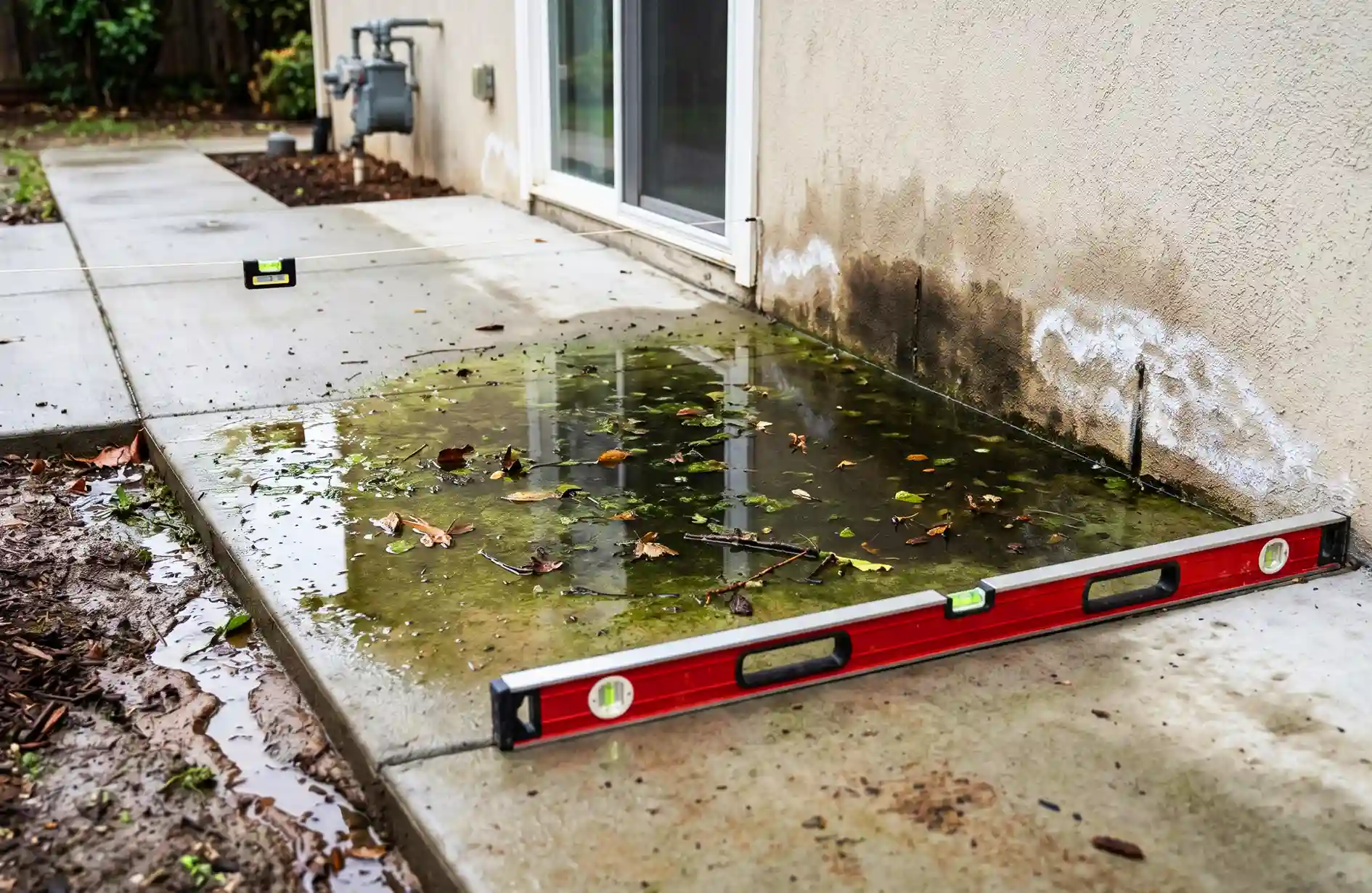 This is the Edmonton mistake. Our winters swing hard, and a membrane that does fine in a mild climate can crack under repeated freeze-thaw cycles.
Building in the kind of freeze-thaw protection green roof systems need to survive here means choosing flexible, cold-rated materials and detailing that can move without splitting.
Then there’s maintenance, because a green roof is not install-and-forget:
– Inspect the drains and membrane at least twice a year
– Clear debris before it clogs the drainage and forces water to pool
-Catch small problems while they’re still small and cheap
If staying on top of that feels like one more thing to manage, folding it into ongoing Professional Landscaping Services keeps the roof checked and clear without you having to think about it.
The Real Cost of Getting It Wrong
People ask about green roof waterproofing cost Edmonton up front, and that’s fair. But the number that really matters isn’t the install; it’s the repair.
When waterproofing fails under a finished green roof, you’re not patching a membrane. You’re removing soil, plants, and drainage to reach it, then rebuilding the whole assembly. A few things shape what a job like this involves:
– Membrane quality and how root-resistant it is
– Roof size, slope, and how many penetrations it has
– Whether it’s an extensive (light) or intensive garden roof
– The installer’s experience, which is the biggest factor of all
Cheap and rushed almost always costs more over the life of the roof. Done right, though, the Benefits of Green Roofs — a longer-lasting roof, lower energy bills, and real stormwater control — pay that investment back for decades.
Getting It Right the First Time
 Every mistake on this list comes down to the same thing: treating waterproofing and drainage as something to rush, instead of the foundation the entire roof stands on.
Do it properly, and a green roof can last 40 years or more. That means the right membrane, a real drainage layer, careful detailing, leak testing before burial, and a maintenance habit you actually keep.
It also means the right team, because green roof work rewards experience at every layer. From the waterproofing underneath to how the finished roof fits your wider modern landscape design, the small details are what decide whether it lasts.
Planning a green roof, or worried about one you already have? Talk to Terra Landscaping for green roofing services across Edmonton and Sherwood Park.
FAQs
How long does green roof waterproofing last?
With quality materials and regular maintenance, 40 years or more.
Do green roofs leak?
Properly installed, they leak less than normal roofs; failures come from poor installation or skipped testing.
What is the drainage layer in a green roof?
The layer that carries excess water away while protecting the membrane from standing water.
Does freeze-thaw damage a green roof in Edmonton?
It can, unless flexible, cold-rated materials and proper detailing are used.
Can a green roof leak be fixed without removing everything?
Rarely, since the soil and layers usually have to come up, which is why testing before burial matters.