
Every spring, Edmonton homeowners walk outside and stare at the same depressing sight — patchy grass, thin spots, and bare patches where a thick lawn used to be. If you’re thinking about grabbing a bag of seed right now, stop. The best time to seed lawn in Edmonton isn’t spring — it’s late August to mid-September, and missing that window is exactly why so many lawns stay thin year after year. Cool-season grasses like Kentucky bluegrass, fescue, and ryegrass — the standard Edmonton mix — germinate faster, root deeper, and survive winter far better when seeded in fall. Edmonton’s climate is unforgiving — but with the right timing and the right team, your lawn doesn’t have to suffer. Terra’s landscaping services in Edmonton make it simple.
Why Late August to Mid-September Is the Best Time to Seed Lawn in Edmonton
The fall seeding window isn’t random. There’s real science behind it — and it lines up perfectly with Edmonton’s climate.
Soil temperature in late August sits between 10–20°C. That’s the sweet spot for grass seed germination. Warm enough for seeds to wake up fast, cool enough that young seedlings don’t get cooked. Pair that with Edmonton’s naturally cooler nights in September, and you’ve got near-perfect growing conditions.
Fall also brings more consistent moisture. Late summer rains in Edmonton are more reliable than the unpredictable spring pattern. Your seeds stay moist without you having to babysit a sprinkler every few hours.
Here’s what makes fall seeding in Edmonton so powerful:
- Soil holds daytime warmth from summer — seeds germinate in 7–14 days
- Cool nights slow evaporation — moisture stays in the soil longer
- Consistent fall rains reduce your watering workload
- Weed growth slows down dramatically in fall
- New grass faces zero competition from aggressive spring weeds
- Roots establish deep before dormancy — lawn bounces back stronger in spring
That last point matters most. Grass seeded in late August to mid-September gets 6–8 weeks of root growth before Edmonton’s first frost (typically mid-October). Following proper seasonal lawn care tips for Edmonton makes all the difference — those deep roots mean better drought resistance, better cold tolerance, and a noticeably thicker lawn come May. For a full month-by-month breakdown, check our seasonal lawn care tips guide.
How Edmonton’s Climate Makes Fall the Ideal Seeding Window
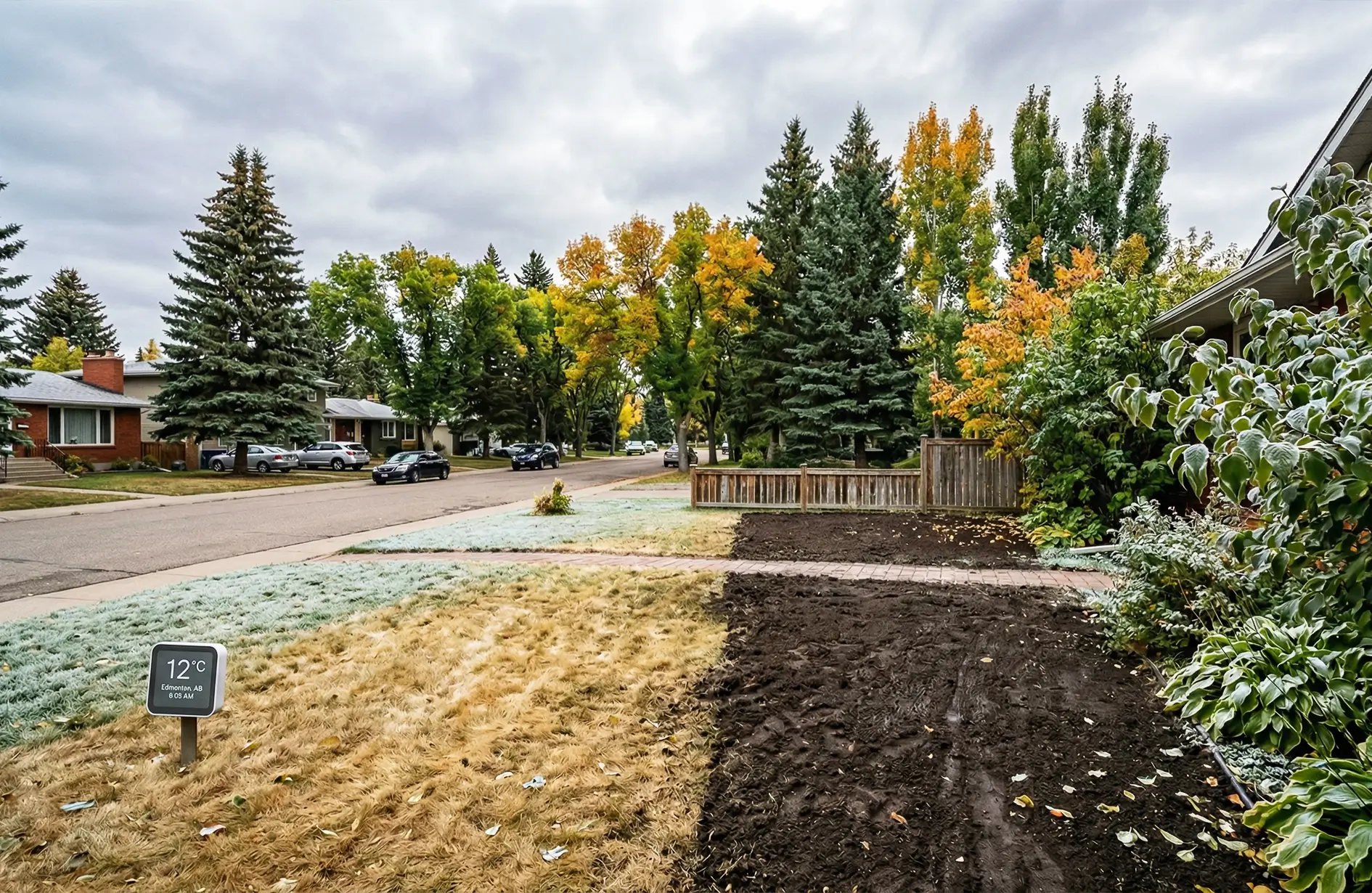
Edmonton isn’t Calgary. It isn’t Vancouver. Our climate is its own beast — short summers, long winters, and a growing season that punishes bad timing.
First frost in Edmonton hits around mid-October, sometimes earlier in areas like Sherwood Park or Fort Saskatchewan. That means your fall seeding window opens in late August and closes hard by mid-September. Seed after that, and your grass won’t establish before dormancy kicks in.
The 45-day rule is your guide. Grass needs at least 45 days of growth before it faces its first hard frost. Count back 45 days from October 15th — that puts your deadline at September 1st ideally, mid-September at the absolute latest.
Cool-season grasses — Kentucky bluegrass, creeping red fescue, and perennial ryegrass — are built for Edmonton. They love the exact conditions fall provides:
- Soil temperatures dropping from summer highs into the 10–20°C range
- Shorter days that reduce heat stress on young seedlings
- Natural moisture from fall precipitation
- Longer nights that keep soil from drying out too fast
The best time to seed lawn Alberta-wide follows this same logic. Whether you’re in Edmonton, St. Albert, or Leduc — late August to mid-September is your window. Don’t miss it.
Spring Seeding in Edmonton: Why It Usually Backfires
Spring feels like the right time to seed. Everything is growing, the snow is gone, and you’re motivated. But Edmonton springs are deceptive — and they punish impatient lawn owners.
Here’s what actually happens when you seed in spring in Edmonton:
Weeds explode first. Dandelions, crabgrass, and annual weeds germinate the moment soil warms up. Your new grass seedlings are competing against an army of established weeds from day one. Guess who usually wins? Not your grass.
Heat arrives too fast. Edmonton goes from cold to hot surprisingly quickly. Young grass with shallow roots — maybe 3–4 weeks old — suddenly faces hot, dry July conditions. Root systems aren’t deep enough to handle it. You get scorching, browning, and die-off.
The window is too short. Spring establishment time in Edmonton is roughly 6–8 weeks before summer heat sets in. Fall gives you the same window but with far better conditions on the other side — dormancy, not heat stress.
Spring seeding isn’t always wrong. If you have severe bare patches after a brutal winter and you absolutely missed the fall window — late April to early May is acceptable. But expect lower success rates, more watering work, and more weed pressure. The best time to overseed lawn Edmonton is still fall. Always.
Fall vs Spring Seeding: A Side-by-Side Comparison
Still not sure? Here’s exactly how the two windows stack up for Edmonton lawns:
| Factor | Fall Seeding (Late Aug–Mid Sep) | Spring Seeding (Apr–May) |
| Soil Temperature | Warm 10–20°C — ideal for germination | Cold then rapidly overheats |
| Weed Competition | Low — weeds naturally slowing down | High — weed explosion in spring |
| Germination Speed | Fast — 7 to 14 days | Slower and inconsistent |
| Root Establishment | Deep roots before winter dormancy | Shallow roots before summer heat |
| Moisture Reliability | Consistent fall rains | Unpredictable spring patterns |
| Overall Success Rate | High — 80 to 90% | Lower — 50 to 60% |
The numbers tell the story. Fall seeding Edmonton isn’t just slightly better — it’s a fundamentally different outcome. Better germination, deeper roots, less weed pressure, and a lawn that actually looks thick and green by the following May.
Step-by-Step: How to Overseed Your Edmonton Lawn This Fall
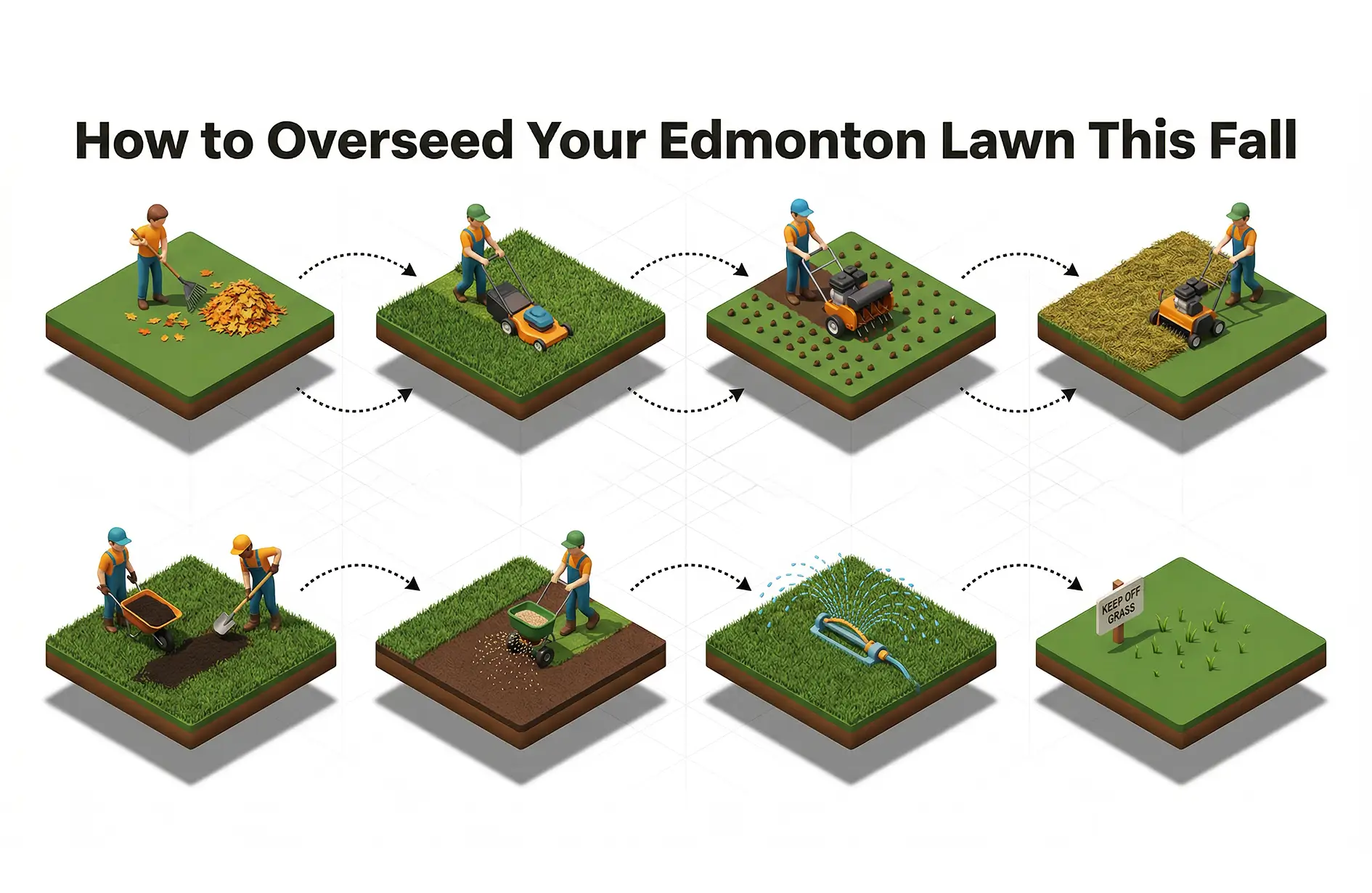
Knowing when to seed lawn Edmonton is half the battle. Here’s exactly how to do it right:
Step 1 — Soil Test First Get a basic soil test in summer. Check pH and nutrient levels. Edmonton’s soil often runs alkaline — knowing this early lets you amend before seeding.
Step 2 — Kill Weeds Early Spot-treat problem areas in July or early August. You want a clean slate before seeds go down.
Step 3 — Mow Short Before seeding, cut your lawn shorter than usual — around 4 to 5 cm. This gives seeds better soil contact and light penetration.
Step 4 — Aerate Core aeration is non-negotiable for Edmonton clay-heavy soil. It breaks up compaction, improves drainage, and gives seeds direct access to soil. Do this 1–2 weeks before seeding.
Step 5 — Spread Seed Choose an Edmonton-hardy mix — Kentucky bluegrass blended with creeping red fescue and perennial ryegrass. Spread at the recommended rate for your grass type. Don’t go heavier thinking more is better — it isn’t.
Step 6 — Top Dress Apply a thin layer of compost or screened topsoil over seeded areas. This locks in moisture and improves germination rates significantly.
Step 7 — Starter Fertilizer Apply a starter fertilizer (high phosphorus) immediately after seeding. Phosphorus drives root development — exactly what you need in fall.
Step 8 — Water Consistently Keep the top 1–2 cm of soil consistently moist for the first 2–3 weeks. Light, frequent watering — not deep soaking. Once grass hits 5 cm, shift to deeper, less frequent watering.
For full new lawn installations — not just overseeding — check out our landscape construction services for professional-grade results.
Common Mistakes Edmonton Homeowners Make When Seeding
Even with the right timing, these mistakes will kill your results:
- Seeding too late — After mid-September, germination slows and roots won’t establish before frost. You’re just feeding birds.
- Skipping aeration — Edmonton clay soil compacts hard. Seeds sitting on compacted soil won’t make meaningful soil contact. Aerate first, always.
- Overwatering in the first week — Soggy soil suffocates seeds. Light and frequent is the rule, not heavy soaking.
- Using the wrong seed mix — Budget seed blends often contain annual ryegrass that dies in one season. Buy a quality perennial mix suited for Edmonton’s Zone 4 climate.
- Skipping starter fertilizer — Regular lawn fertilizer won’t cut it at seeding time. High-phosphorus starter fertilizer is specifically designed for new root development.
- Dormant seeding too early — Dormant seeding (November) is a valid last resort but only when soil is consistently cold. Too early and seeds germinate in a warm spell, then die in frost.
Should You Hire a Pro or DIY Your Fall Lawn Seeding?
DIY seeding works fine if your lawn needs basic overseeding and you’re comfortable with the steps above. But there are situations where professional help pays for itself fast.
Pros bring calibrated equipment — commercial aerators, precision spreaders, and the experience to read your specific lawn’s needs. They nail timing, coverage rates, and seed selection without guesswork. For larger properties in areas like Sherwood Park or St. Albert, uneven coverage from DIY spreaders often means patchy results that frustrate you all spring.
Terra’s team handles both overseeding programs through our landscape property maintenance packages and full new lawn installations through landscape design Edmonton services. We schedule your fall seeding at the exact right window for your yard — not a generic date off a calendar.
The goal is simple — you get a thick, healthy lawn next spring without the guesswork, wasted seed, or repeat applications.
Conclusion
The best time to seed lawn in Edmonton is a narrow but powerful window — late August to mid-September. Warm soil, cool nights, consistent moisture, and minimal weed pressure combine to give your grass the strongest possible start before winter. Spring seeding is tempting but risky. Fall seeding is strategic. Edmonton’s cool-season grasses are built for exactly this window, and the results speak for themselves — thicker, greener, more resilient lawns the following year.
Start planning now. Identify your bare patches, book your aeration, and get your seed mix ready. The fall window comes faster than you think — and missing it means another year of patchy grass. Book a free consultation with Terra today and let our Edmonton landscaping experts schedule your fall seeding for maximum results.
FAQs
What is the first frost date in Edmonton, and how many weeks before it should I seed my lawn?
Edmonton’s first frost hits around mid-October. Seed at least 6–8 weeks before that — so late August to early September is your target.
Does dormant seeding work in Edmonton, and when should I try it?
Yes, but only as a last resort. Wait until soil is consistently below 2°C in November — seeds stay dormant and germinate in spring.
What is the best grass seed mix for Edmonton lawns?
A blend of Kentucky bluegrass, creeping red fescue, and perennial ryegrass works best for Edmonton’s Zone 4 climate.
How long does grass take to germinate after seeding in Edmonton?
Most seed germinates in 7–14 days with proper soil temperature and moisture. Kentucky bluegrass can take up to 21 days.
When and how should I use starter fertilizer when seeding my lawn?
Apply a high-phosphorus starter fertilizer immediately after spreading seed — it directly supports root development before winter.