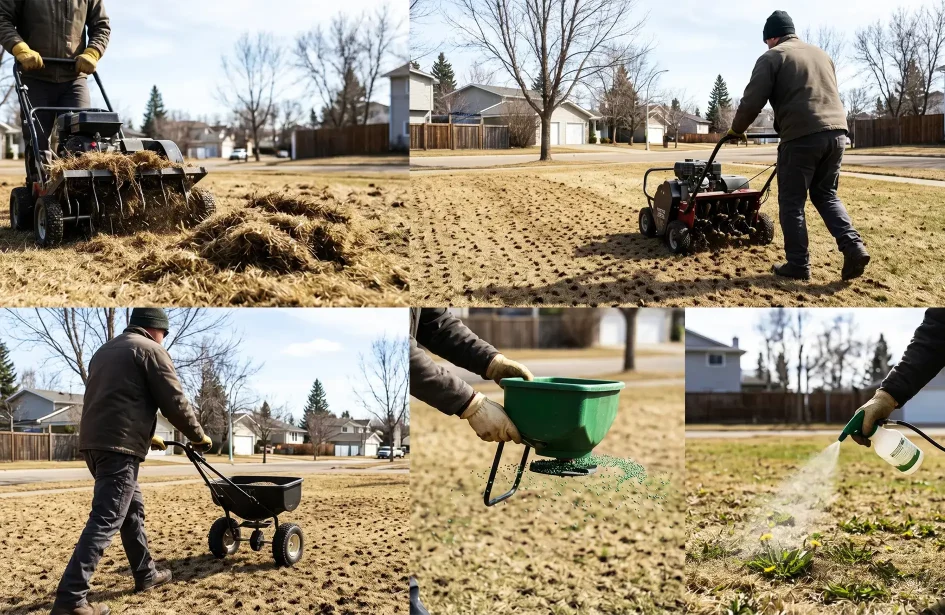
Walk outside right now and look at your lawn. See that matted brown mess? Those bare patches everywhere? The moss growing in spots where grass used to be? That’s what Edmonton winter does to lawns. Six months under snow and ice. Freeze-thaw cycles beating up grass roots. Clay soil is packed harder than concrete. By the time snow finally melts, your lawn looks dead. But here’s the thing—most of that damage is fixable with proper Edmonton spring lawn care.
You’ve got a narrow window though. Miss April and May and you’re fighting problems all summer. This guide walks through exactly what your lawn needs for post-winter lawn recovery—dethatching, aeration, overseeding, fertilization, and weed control. Everything timed specifically for our short growing season. Skip any step and you’re leaving your lawn half-recovered. Follow all five and you’ll have thick green grass by June. Let’s fix the winter damage before it’s too late. Check Terra Landscaping’s services for professional help or their lawn maintenance options if you want experts handling this.
Why Edmonton Lawns Need Special Spring Recovery
Our lawns take an absolute beating over winter. Not like BC where grass just sits dormant. Here it’s actual damage happening under that snow.
What winter does to Edmonton lawns:
- Freeze-thaw cycles heave soil and damage roots
- Snow mold grows under ice creating dead circular patches
- Heavy snow weight compacts clay soil severely
- Salt and sand from roads kill grass along edges
- Voles and mice tunnel underneath eating roots
Walk across your yard in early April. Feels like walking on pavement in spots? That’s severe soil compaction relief needed immediately. Push a screwdriver into the ground. Barely goes in? Roots can’t penetrate that.
Signs Your Lawn Needs Recovery
Dead grass vs dormant grass: Dead pulls up easily with no roots. Dormant is brown but roots hold firm. Most lawns are a mix of both after our winters.
Thatch layer problems: That spongy brown layer between grass and soil. Over half inch thick? Needs removal. Blocks water and nutrients from reaching roots.
Bare spots everywhere: Winter kill, salt damage, animal traffic. These won’t fill in themselves without overseeding.
Alberta grass types that survive here need specific spring lawn maintenance steps. Cool-season varieties like Kentucky Bluegrass and Fescue dominate Edmonton lawns. Both need aggressive spring recovery to bounce back strong.
Step 1 – Lawn Dethatching and Debris Removal
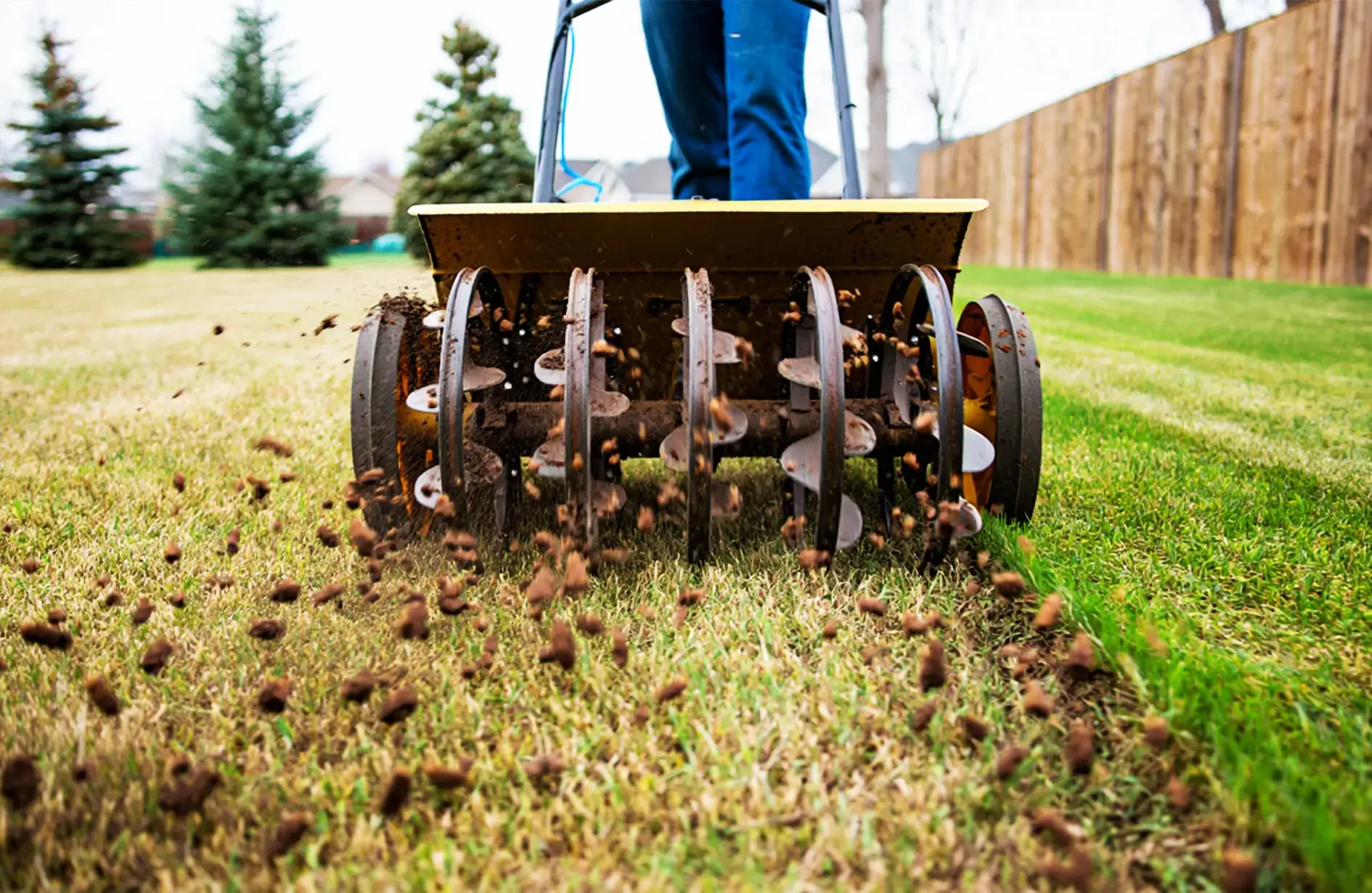
The first step is cleaning up the mess. Lawn raking debris sounds simple but timing and technique matter.
Seasonal yard cleanup starts once the ground thaws completely. Usually late April here — if you’d rather skip the heavy work, you can hire spring yard cleanup Edmonton professionals to handle dethatching, debris removal, and lawn prepping for you. Too early and you’re raking frozen ground doing nothing. Wait for the soil to feel soft when you walk on it.
What to remove:
- Dead matted grass from winter
- Leaves that got buried under snow
- Branches and twigs blown in
- Any remaining sand or salt residue
Lawn dethatching Edmonton means removing that thick brown layer suffocating your grass. Not every lawn needs dethatching—only if thatch exceeds half inch thickness.
When to Dethatch Your Edmonton Lawn
Timing matters: Late April to early May. The ground thawed but the grass was not actively growing yet. Dethatching stresses grass. Do it too late when grass is growing and recovery slows dramatically.
Thatch thickness guide: Push finger into grass down to soil. Feel a spongy layer over half inch thick? Time to detach. Under half an inch? Just rake vigorously and you’re fine.
Power rake or verticutter works best. These machines pull thatch up without damaging healthy grass. Regular rakes take forever and don’t penetrate deep enough.
Step 2 – Core Aeration for Soil Compaction Relief
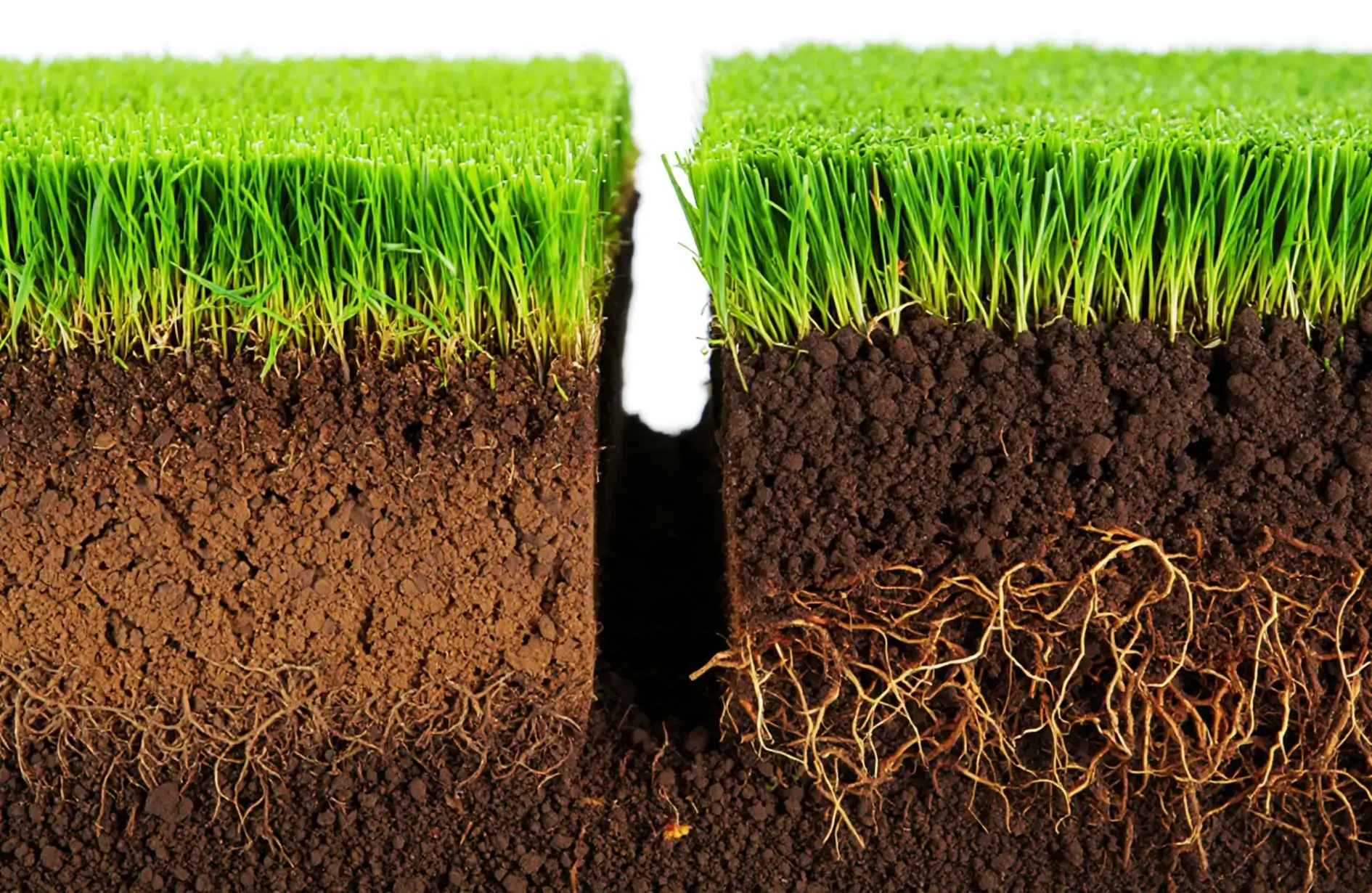
Edmonton lawn aeration is absolutely critical after winter. Our clay soil compacts brutally. Grass roots suffocate without oxygen.
Soil compaction relief happens through core aeration. The machine pulls thousands of small soil plugs from your lawn. Each plug is 2-3 inches deep. Creates channels for air, water, nutrients to reach roots.
Why aeration matters here specifically:
- Clay soil compacts worse than sandy or loamy soil
- Freeze-thaw cycles make compaction severe
- Spring is only time soil is moist enough for proper core extraction
- Grass entering active growth phase recovers fast from aeration stress
Root growth promotion happens immediately after aeration. Roots grow into newly opened soil channels. Water penetrates deep instead of running off. Fertilizer gets absorbed instead of sitting on the surface.
Timing? Late April to mid-May. Same window as dethatching. Ground fully thawed, soil slightly moist, grass starting spring growth. Wait until June and you’ve missed the window completely.
Step 3 – Overseeding for Thick Healthy Growth
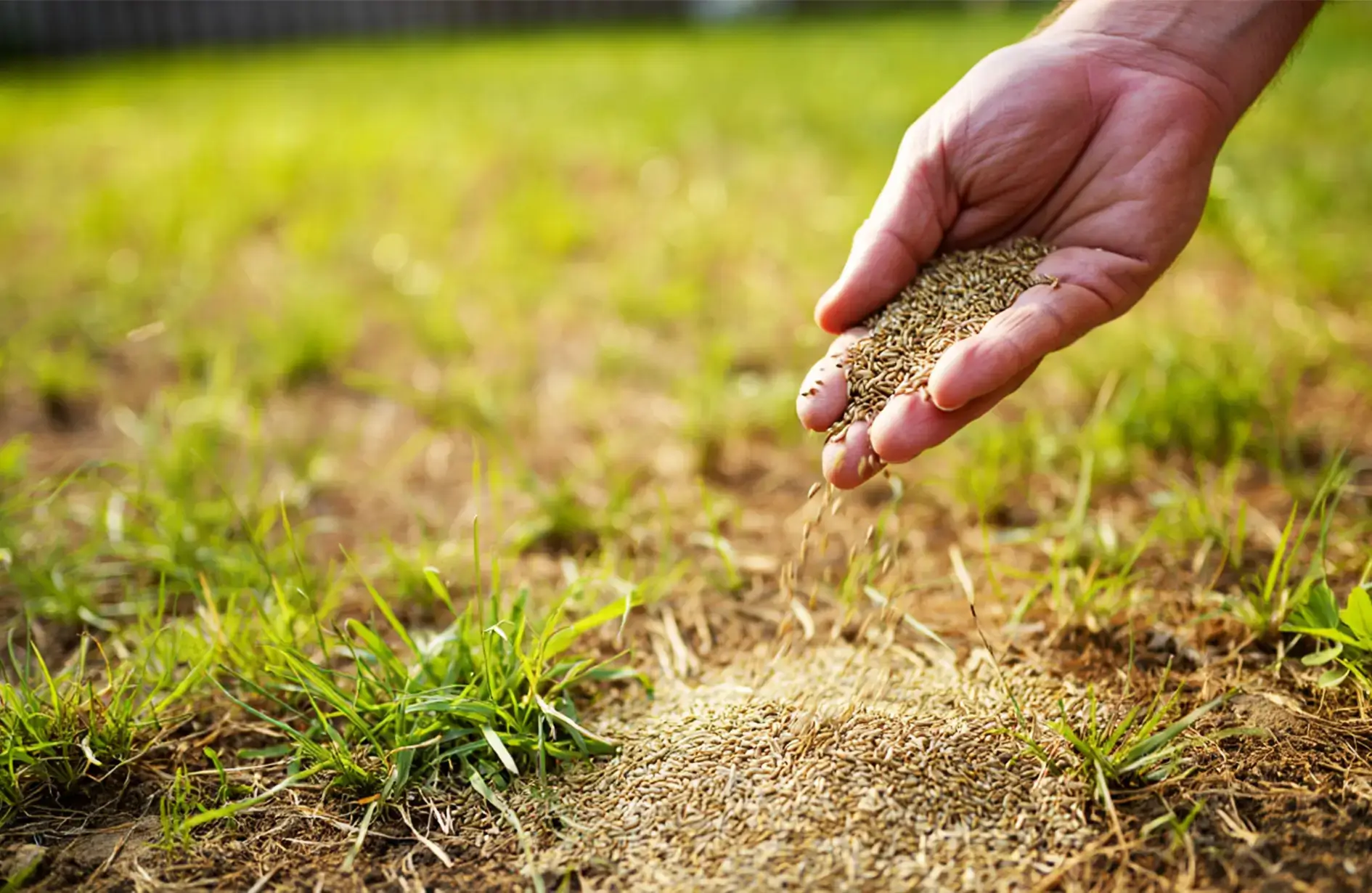
Grass overseeding tips start with understanding why you’re doing it. Winter kills grass. Creates bare spots. Thins out thick areas. Overseeding fills everything back in.
Grass seed selection for Edmonton means cool-season varieties. Kentucky Bluegrass for sunny areas. Fine Fescue for shade. Perennial Ryegrass for quick germination filling spots fast.
Alberta grass types proven here:
- Kentucky Bluegrass – spreads naturally, handles traffic, needs full sun
- Creeping Red Fescue – shade tolerant, drought resistant once established
- Perennial Ryegrass – germinates in 7-10 days, quick fill for bare spots
When to overseed: Immediately after aeration. Seeds fall into open holes making direct soil contact. Germination rates double compared to spreading seed on compacted soil.
Remember: The best time to seed lawn in Edmonton is constrained by our short growing season, which makes late August to mid‑September the ideal window for full lawn establishment, while April–May works best for spring overseeding of winter‑damaged lawns.
Best Grass Seed for Edmonton
Zone 3-4 hardy options only. Those seed mixes from big box stores? Half the varieties won’t survive here. Buy seed specifically rated for Canadian prairies.
Application rates: 3-5 pounds per 1,000 square feet for thin areas. 8-10 pounds for bare spots. Don’t waste seed on thick healthy grass—it won’t penetrate to soil anyway.
Watering after overseeding: Daily for 2-3 weeks. Keep the seed moist but not soaking. Seed drying out kills germination. It takes 14-21 days to see new grass sprouting.
Step 4 – Top Dressing and Fertilization
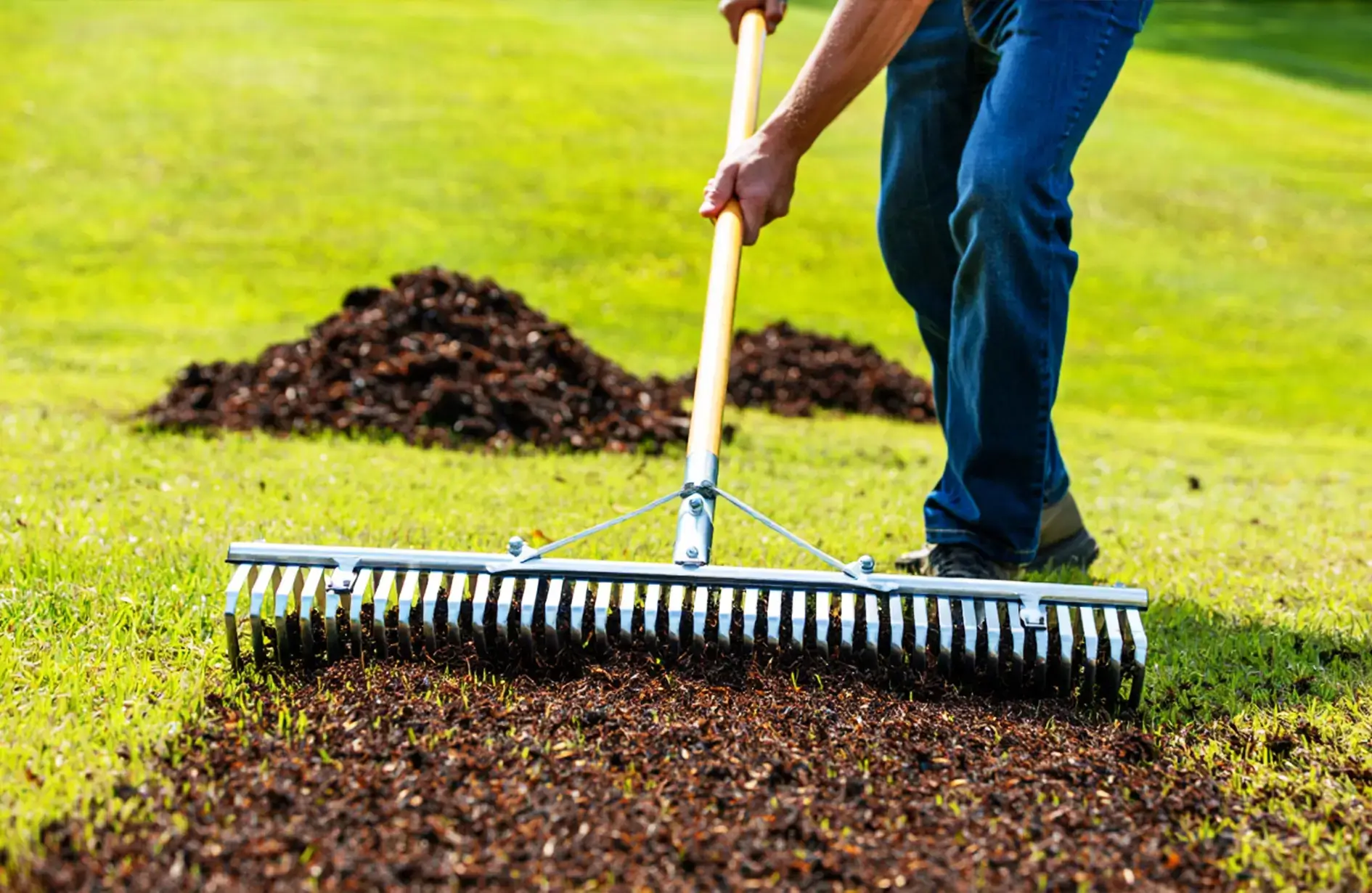
Top dressing application benefits:
- Levels small dips and uneven spots
- Improves soil quality especially in clay
- Helps new seed make soil contact
- Adds organic matter feeding grass naturally
The compost topsoil layer should be a quarter inch thick maximum. Too thick smothers grass. Use screened compost mixed with quality topsoil. Spread right after overseeding so new seed sits in fresh soil mix.
Canadian spring fertilization timing is crucial here. Apply starter fertilizer (high phosphorus) immediately after aeration and overseeding. Promotes root growth promotion instead of just green top growth.
Organic lawn amendments work great in Edmonton. Compost, composted manure, organic fertilizer blends. Release nutrients slowly. Don’t burn grass like synthetic fertilizers can when over-applied.
Fertilizer application: Use a spreader for even coverage. Water thoroughly within 24 hours. New grass seed needs those nutrients available immediately for germination and root development.
For material choices and recommendations, see our landscaping materials guide.
Step 5 – Weed Control and Crabgrass Prevention
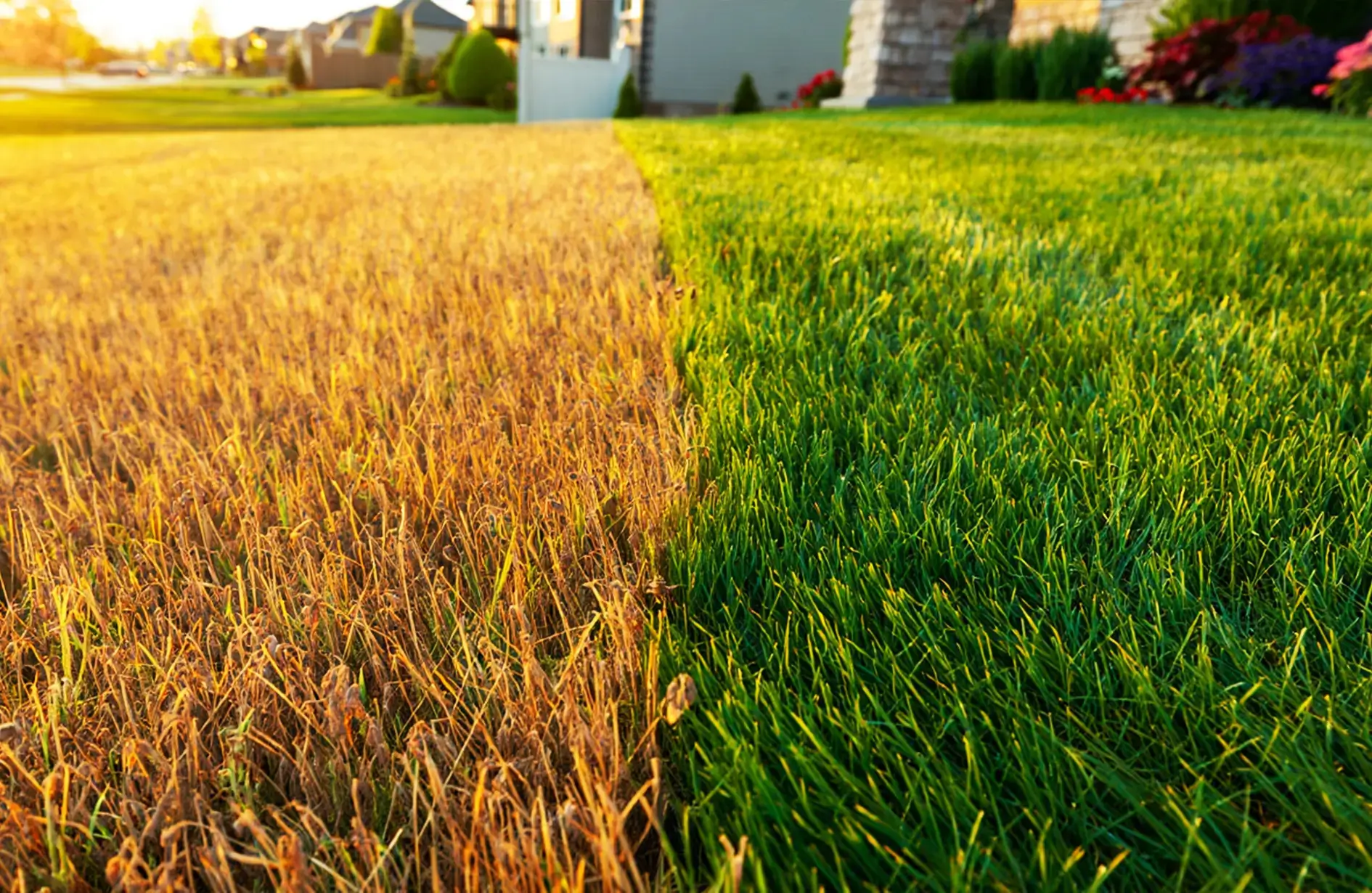
Crabgrass prevention Edmonton means applying pre-emergent in early May. Crabgrass seeds germinate when soil hits 15-18°C consistently. Usually mid-May here.
Pre-emergent timing window: Apply when forsythia bushes bloom. Perfect soil temperature indicator. Too early and the product breaks down before crabgrass germinates. Too late and crabgrass already sprouted.
Spring lawn care steps for lawn and weed control in Edmonton:
- Early May – Pre-emergent for crabgrass and annual weeds
- Late May – Broadleaf weed control for dandelions and clover
- June – Spot treat any weeds that emerged despite pre-emergent
Important: Don’t apply pre-emergent where you overseeded. It stops ALL seeds from germinating including your new grass seed. Wait 4-6 weeks after overseeding before using pre-emergent in those areas.
Dandelions explode here in late May. Hit them early while small. Once they flower you’re fighting thousands of seeds spreading everywhere. Broadleaf herbicide works when weeds are actively growing and temps are above 15°C.
Complete Spring Lawn Care Schedule Timeline
Lawn care steps in the spring need proper timing. Here’s exactly when to do what for Edmonton spring lawn care.
| Timing | Task | Why Now | Results |
| Late April | Cleanup + Dethatch | Ground thawed, grass dormant | Removes winter debris and thatch |
| Late April/Early May | Core Aeration | Soil moist, perfect conditions | Opens compacted clay soil |
| Immediately After | Overseeding | Seeds fall into aeration holes | High germination rates |
| Same Day | Top Dressing | Fresh soil for new seed | Improves seed-soil contact |
| Within 24 Hours | Starter Fertilization | Feeds emerging grass | Promotes root growth |
| Early May | Pre-Emergent | Before soil hits 15°C | Prevents crabgrass germination |
| Late May | Broadleaf Control | Weeds actively growing | Kills dandelions before seeding |
| Ongoing May-June | Daily Watering | New seed needs moisture | Ensures germination |
Mowing trimming schedule: Don’t mow for 2-3 weeks after overseeding. Let new grass establish to 3-4 inches before first cut. Then maintain 2.5-3 inch height all season.
Spring lawn care schedule is tight here. Miss April and May and you’re playing catch-up all summer. Get everything done in this window and your lawn thrives June through September.
Concluion
Edmonton spring lawn care done right transforms winter-damaged lawns into thick green grass by early summer. Five steps—dethatch, aerate, overseed, fertilize, control weeds. All timed specifically for our climate and short growing season. Skip any step and recovery is incomplete. Do all five and your lawn bounces back strong. The window is late April through May. Ground needs to be thawed, soil slightly moist, grass entering active growth. Miss this window and you’re waiting until next spring. Ready to fix winter damage properly? Contact Terra Landscaping for professional spring lawn recovery services or check their complete lawn care options. Stop fighting winter damage and start winning.
FAQs
When should I start spring lawn care in Edmonton?
Start cleanup and dethatching in late April once ground is fully thawed, then aerate and overseed in late April to early May for best results.
What’s the correct order for spring lawn care steps?
Cleanup and dethatch first, then core aeration, immediately overseed and top dress, fertilize within 24 hours, apply pre-emergent weed control in early May.
Can I skip dethatching if my lawn looks okay?
Yes, only dethatch if thatch layer exceeds half inch thickness—test by pushing finger down to soil and feeling for spongy brown layer.
How long after overseeding can I mow my lawn?
Wait 2-3 weeks until new grass reaches 3-4 inches tall before first mowing, then maintain 2.5-3 inch height throughout the season.
Should I fertilize before or after aeration?
Always after aeration—fertilizer falls into open holes reaching roots directly instead of sitting on compacted soil surface doing nothing.